Located in the heart of Hanoi, the Imperial Citadel of Thang Long is one of Vietnam’s most important historical and cultural landmarks. Recognized by UNESCO as a World Heritage Site in 2010, the citadel preserves more than 1,300 years of continuous history and offers a fascinating glimpse into the rise and evolution of the Vietnamese nation.
For centuries, this was the political center of Vietnam, serving as the seat of power for multiple dynasties and witnessing some of the country’s most significant historical events.

A UNESCO World Heritage Site
The Imperial Citadel traces its origins back to the 11th century when Emperor Ly Thai To moved the capital to Thang Long, the former name of Hanoi. Built upon earlier fortifications dating back even further, the site remained the political heart of Vietnam through the Ly, Tran, Le, and Nguyen dynasties.
In 2010, UNESCO recognized the Central Sector of the Imperial Citadel of Thang Long as a World Heritage Site for its outstanding cultural value and the exceptional archaeological evidence documenting over a millennium of Southeast Asian history.
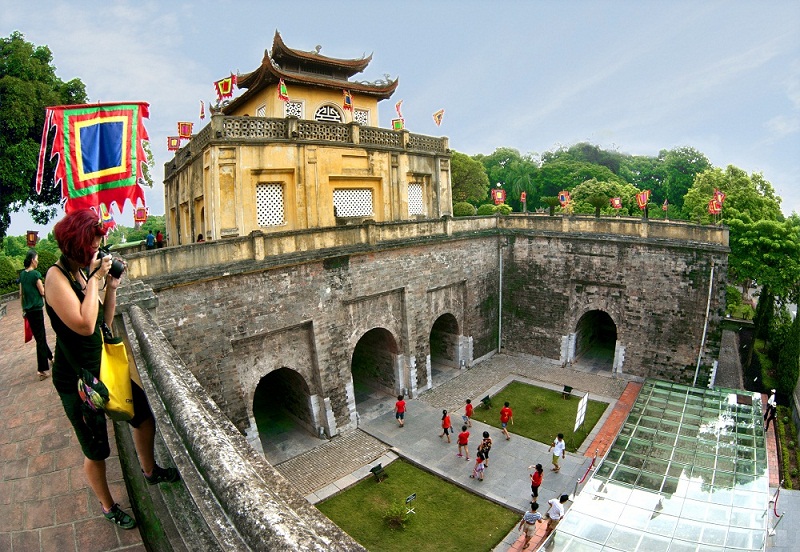
Explore the Ancient Royal Complex
Today, visitors can walk through several surviving monuments and archaeological remains that reveal the scale and significance of the former royal capital.
Highlights include:
Doan Mon Gate
The grand southern entrance to the Forbidden City, once reserved for emperors and royal ceremonies. This impressive stone gate remains one of the most iconic structures within the citadel.
Kinh Thien Palace Foundation
Although the original palace no longer exists, its elevated stone platform and beautifully carved dragon staircases remain. This was once the ceremonial center of the imperial court and the most important building within the royal complex.
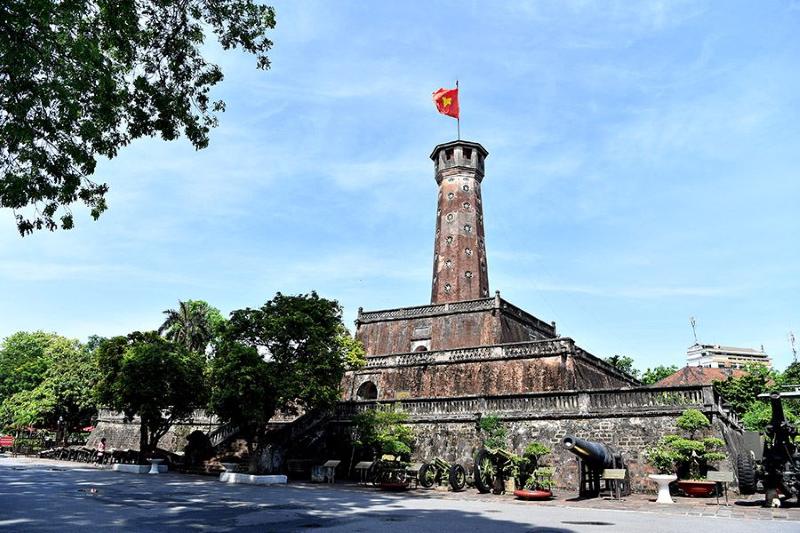
Hanoi Flag Tower
Standing nearly 33 meters high, the Hanoi Flag Tower is one of the few structures that survived many conflicts and remains a symbol of the city today. Visitors can admire its unique military architecture and panoramic views of the surrounding area.
D67 Revolutionary House and Bunker
A fascinating addition to the site, this command center played an important role during the Vietnam War and offers insight into modern Vietnamese history.
Discover One of Southeast Asia’s Most Important Archaeological Sites
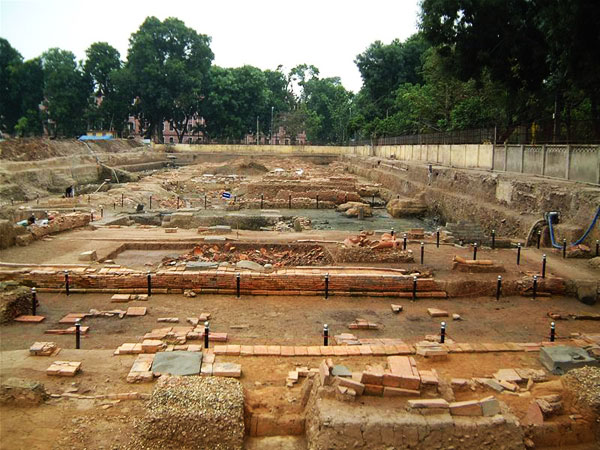
One of the most remarkable parts of the Imperial Citadel is the archaeological zone at 18 Hoang Dieu Street.
Excavations carried out in the early 2000s uncovered layers of palaces, wells, roads, foundations, drainage systems, ceramics, coins, and royal artifacts dating from the 7th to the 19th centuries.
The discoveries revealed continuous occupation and development over multiple dynasties, making the site one of the most significant archaeological finds in Southeast Asia.
Visitors can explore exhibition areas displaying artifacts recovered from the excavations and learn how the royal city evolved through different periods of Vietnamese history.
Why Visit the Imperial Citadel?
- UNESCO World Heritage Site
- More than 1,300 years of continuous history
- Former political center of Vietnam
- Impressive royal architecture and ancient gates
- Exceptional archaeological discoveries
- Insight into both imperial and modern Vietnamese history
- Conveniently located in central Hanoi
Visitor Information
The Imperial Citadel is located in Ba Dinh District, just a short walk from Ba Dinh Square, Ho Chi Minh Mausoleum, and the Presidential Palace. It is one of the essential cultural attractions for visitors wishing to understand the history, heritage, and identity of Vietnam.
Whether you are passionate about archaeology, architecture, or history, the Imperial Citadel of Thang Long offers one of the most rewarding cultural experiences in Hanoi.
Good to Know:
Address: 19C Hoàng Diệu Street, Ba Đình District, Hanoi
Opening Hours: 08:00 – 17:00 daily
Entrance Fees: 100,000 VND/person
Recommended Visit Duration: 2–3 hours to fully explore the archaeological area, ancient gates, palaces, and exhibition halls.
Best Time to Visit: Early morning or late afternoon, especially during spring (February–April) and autumn (September–November), when Hanoi’s weather is at its most pleasant.
The Imperial Citadel is often combined with Ho Chi Minh Mausoleum, One Pillar Pagoda, and the Temple of Literature, making it one of the highlights of a full-day Hanoi city tour.