
Just 35 km from Hanoi, Dong Ho Painting Village is one of Vietnam’s most fascinating cultural destinations. Nestled along the banks of the Duong River in Bac Ninh Province, this traditional craft village has preserved the art of woodblock folk painting for centuries. More than simple decorative artworks, Dong Ho paintings reflect Vietnamese traditions, beliefs, daily life, and wishes for prosperity, making them an important symbol of the nation’s cultural identity.

A Traditional Craft Village with Centuries of History
Dong Ho Painting Village is located in Song Ho Commune, approximately one hour from Hanoi. The village is believed to have developed its folk painting tradition during the Le Dynasty, although local legends trace its origins back to the Ly Dynasty over 900 years ago.
For generations, nearly every household in the village participated in the production of folk paintings, from carving woodblocks and making traditional paper to mixing natural pigments and printing finished artworks. Today, while the number of artisan families has declined, Dong Ho remains the most famous folk painting village in Vietnam and a valuable repository of traditional craftsmanship.

What Makes Dong Ho Paintings Unique?
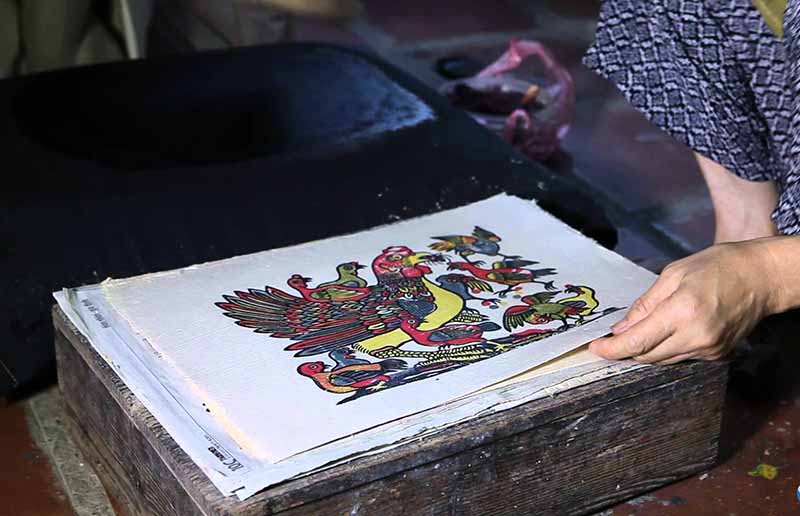
Unlike modern paintings, Dong Ho artworks are created entirely by hand using carved wooden blocks and natural materials.
Natural Colors from Nature
One of the most distinctive features of Dong Ho paintings is the use of organic pigments:
- Black comes from burnt bamboo leaves.
- Red is made from laterite soil and mountain minerals.
- Yellow is extracted from gardenia flowers.
- Green is produced from leaves and plants.
- White is created from crushed seashell powder.
These colors are printed layer by layer using separate woodblocks, resulting in vivid yet harmonious artworks.

Do Paper (Dó Paper)
The paintings are printed on traditional “Do” paper coated with crushed seashell powder and sticky rice paste. This gives the surface a subtle shimmering effect and helps preserve the artwork for many years.
Themes and Meanings
Dong Ho paintings offer a glimpse into traditional Vietnamese life and values. Popular themes include:
- Prosperity and good fortune
- Family happiness
- Farming activities
- Folk tales and legends
- Historical heroes
- Social satire and humor
Some of the most famous works include:
- The Wedding of the Mice
- Jealousy Fight
- The Frog Teacher
- Saint Giong
Traditionally, families purchased these paintings before Lunar New Year as symbols of luck, happiness, and prosperity for the coming year.
Visiting Dong Ho Village Today
A visit to Dong Ho Village offers much more than simply viewing artworks.
What to Expect
- Explore traditional family workshops.
- Learn about the history of Vietnamese folk art.
- Watch artisans carve and print woodblocks.
- Try printing your own Dong Ho painting.
- Visit small museums and exhibition spaces.
- Purchase authentic handmade paintings directly from local artisans.
Many visitors combine Dong Ho Village with nearby attractions in Bac Ninh, making it an ideal half-day cultural excursion from Hanoi or a full day craft villages tour.
Why Foreign Visitors Love Dong Ho Village
International travelers are often fascinated by:
- Authentic Vietnamese heritage away from tourist crowds.
- Traditional printing techniques still practiced today.
- Meaningful cultural stories behind each artwork.
- Hands-on craft experiences.
- Excellent photography opportunities in a peaceful rural setting.
For travelers interested in culture, history, and traditional craftsmanship, Dong Ho Village provides a deeper understanding of Vietnam beyond its famous cities and landscapes.
Visitor Information
Location: Song Ho Commune, Thuan Thanh District, Bac Ninh Province (about 35 km from Hanoi)
Distance from Hanoi: Approximately 1 hour by car
Recommended Visit Duration: 1.5–3 hours
Best Time to Visit: Year-round, especially before Lunar New Year when painting production becomes more active


